Free consultation
Questions about your own case? Leave your number and a doctor will call you back.
Both clear aligners and braces move teeth with gentle, constant pressure. The difference is how that pressure is applied, and what it means for your daily life.
How they work
Braces use brackets bonded to the teeth and a wire that the orthodontist adjusts every 6 to 8 weeks.
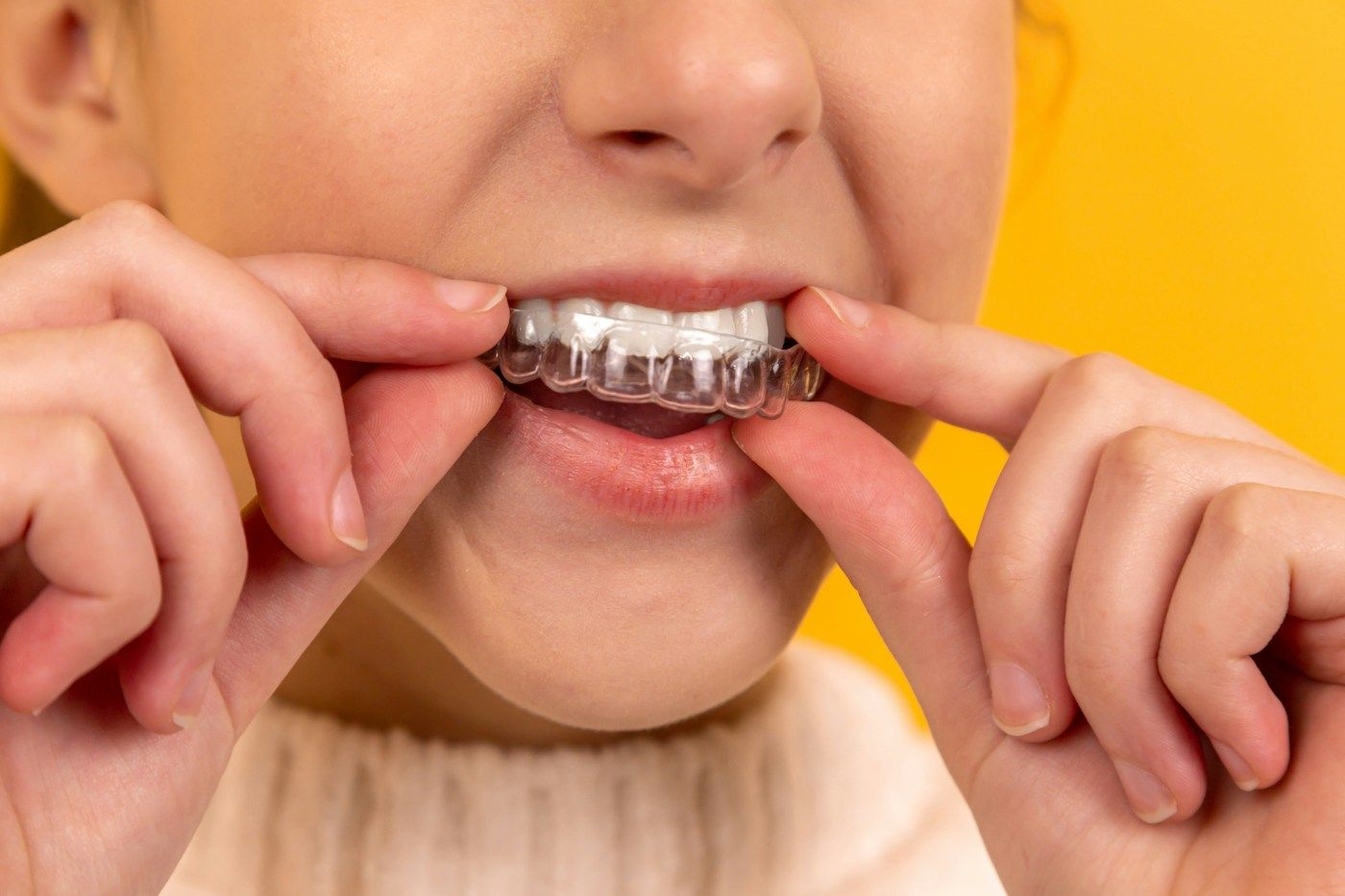
Clear aligners are a series of thin plastic trays. You switch to a new set every 1 to 2 weeks, and each set moves the teeth a fraction of a millimeter.
Side-by-side comparison
| Feature | Clear aligners | Braces |
|---|---|---|
| Visibility | Nearly invisible | Visible (ceramic less so) |
| Food | No restrictions, remove to eat | Avoid hard and sticky food |
| Hygiene | Brush and floss normally | Needs extra care around brackets |
| Discipline | Must be worn 22 hours a day | Always working |
| Typical time | 6 to 18 months | 12 to 24 months |
| Price at our clinic | from $3,490 | from $4,200 |
Who should choose aligners
Aligners suit adults and responsible teens with mild to moderate crowding or gaps, or teeth that shifted after earlier treatment. If you speak in public, or simply don’t want metal on your teeth, they are usually the better choice.
Who should choose braces
Braces are often better for complex cases: severely rotated teeth, large bite corrections, or younger patients who might forget to wear aligners.
Don’t forget the retainer
Whatever you choose, teeth tend to move back. A retainer, worn at night, keeps the result. Plan for it from the start.
The quickest way to decide
A 3D scan and simulation shows how your teeth would move with aligners and how long it would take. At our clinic it is free and takes about 20 minutes.